by Steven Waechter | Nov 28, 2012
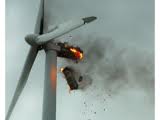
 The tax credit for wind energy is back on the agenda, and Iowa’s own Chuck Grassley and Terry Branstad are taking leadership roles in fighting for the extension, going so far as to appear together at a press conference about it.
Wind energy is my favorite target at the moment, because it combines socialist economics, corruption, aesthetic vandalism, junk science, and cynical political machinations – all melting together into a hideous soup of wasted money and ruined skylines.
Tough Love
After the last election, targeting two of Iowa’s best known Republicans for criticism is perhaps a risky business, but for those who think I – with my dislike of leftists – shouldn’t be doing it, I offer the following historical analogy:
In the days of the Roman legions, the centurions were legendary for their swift discipline. One centurion developed a habit of breaking his staff over the backs of soldiers who had acted disobediently. “Give me another,†he would say to his aide when it happened, and it happened so often that “give me another“ became his nickname . In this way, withering cruelty became not a malicious attempt to destroy, but deep concern for long-term wellbeing.
Well, give me another.
Political Venture Capital
Wind energy is an odious political scam. First of all, the industry cannot survive without government subsidy, namely, the tax credits. The wind industry makes profits not from the power grid, but from their tax returns.
It is also ridiculously expensive and underproductive. When Alliant Energy built the Whispering Willows wind farm in Franklin County, they petitioned utilities regulators for a rate hike to help cover the cost. The market had reached a price for electricity, generated by coal, but at that price the wind farm was not economically viable – it wouldn’t produce enough electricity to cover its cost.
They built it anyway. Even though the money in the wind industry is earned on the tax return and not the power grid, they didn’t want to eat an operating loss, so rates have to increase. Consumers in central Iowa found themselves paying more money for the electricity they used – still mostly generated from coal – to pay for a wind farm erected so the utility could earn a tax credit.
The utility sells the power and claims the credits; the landowners earn fees for having these modern art sculptures on their land; the turbines produce just enough electricity to power a massive, metaphorical conveyor belt carrying money from the pockets of poor customers to the rich and the politically-connected… Because that is progress these days.
Grassley stated at the recent news conference that “We have a 20 year investment in this… it would be terrible to throw a way a 20 year investment if it will mature in a short time.â€
We have been waiting for the wind energy industry to mature since the days when pioneer farmers could order a windmill from the Sears and Roebuck catalog. Most of them were dismantled after rural America was electrified. Now, the fantasy is that the same technology that was felled by electricity will be the future of electricity.
Central Dreaming
Nothing becomes outdated faster than a fantasy about the future. This is never more true than when the fantasy has its birth in the minds of politicians; a future brought to you by the same people who bring you inflation, wars, and prisons.
The general public is also rapidly becoming too poor to cover higher utility bills, but wind energy fits into the political rhetoric of our time and so they charge forward. Wind energy doesn’t make power cheaper, reduce our trade deficit, strengthen the dollar, or generate tax revenue – but it can get you elected.  It employs only a handful of people, especially when compared to the coal industry – which politicians have threatened to kill. The turbines themselves are insanely ugly, and provide a far too convenient backdrop for political photo opportunities.
I understand that this is politics. I also object to the fact that this is politics. The experience of subsidized public housing should have been enough to dispel the urge to make fantasy into reality, but it wasn’t. We will all pay the price. Literally.

by | Nov 6, 2012
 Final Thoughts
Setting The Senate Table– Here is the link to our Iowa Senate overview. Remember that as tonight starts Democrats already have 13 seats to the Republicans 11. Factoring in uncontested races and races heavily favored to one party or the other the tally is R’s-19 and D’s 18. Further adding in the 8 seats I see leaning one way or another leaves the count at R’s-24 and D’s21–with 5 seats as complete toss-ups.
A Blown Opportunity—The Republican Party of Iowa has done a great job this cycle by getting a candidate on the ballot in every Senate district statewide. That said, regardless of how things turn out tonight, if they fail to take the majority a big lost opportunity will be in Senate District 34. It is fair to note the Party really had nothing to do with this debacle and nobody could have predicted Randi Shannon’s melt down, which was the most embarassing episode in Iowa politcs in the last 10 years. However you feel about the Ron Paul movement afoot here in Iowa, the Liberty PAC endorsed and supported Shannon and must take a ton of blame here. This type of scenario playing out is absolutely unacceptable—if Republicans fall one seat short…this will prove haunting.
Differing Campaign Strategies—As we have discussed here before, one of the interesting things about the hotly contested Iowa Senate races is the opposite ways in which the two Parties have distributed money and resources.
While the Republican Party chose to spread their money around relatively evenly, the Democrats have staked out three races that they deem unacceptable to lose. In these three races, combining the October 19th and the just released November 2nd reports, the Democrats have spent $1.01 million dollars. The numbers are $381,000 in SD 26, $358,000 in SD 36, and $277,000 in SD 48.
If they don’t win these three seats, and lose a few other close ones they chose not to invest heavily in, this strategy will have been a disaster.
Time For RPI To Deliver—With the changing face of the RPI and the well documented upheavals along the way, perhaps no one has more on the line here in Iowa than the new leadership. Many of these new folks have heavy Ron Paul ties and have impressive political accomplishments in the past—these include Ron Paul finishing a very close 3rd in the Iowa Caucuses and winning numerous Straw Polls in several states. Winning elections is far different.
If Republican candidates do well this group can cement themselves, if they do not the battle to remove them will begin in earnest. I for one am pulling for them to succeed—a leadership that knows how to win elections is never a bad thing. If it turns out they can win elections, something tells me that compromising on both sides and co-existing is a real possibility.
What To Watch For
• If Ben Lange beats Bruce Braley or even runs within a few points of him, I believe there is over an 80% chance Republicans take the majority in the Iowa Senate.
• If Tom Latham is able to carry Polk County—and Romney is able to put up a good showing here—even if Romney loses Iowa I predict he will win the Presidency.
• If Tom Latham carries Polk County, 90% chance Dan Charleston is the new sheriff in town.
• Any of the following candidates winning will be the sign of a major Republican wave in Iowa—and likely nationally. The following are all great candidates and good people who are running in heavily Democratic districts: Dave Edwards (SD 16), Vicki Stogdill (SD 18), and Patti Branco (HD 34).
Predictions
President— Mitt Romney wins. Besides the enthusiam advantage, this prediction is based on the fact that no president in the history of our Country has been re-elected with economic numbers this bad and a set of “accomplishments” this unpopular. If he wins tonight then a shift has occured in America where results and actual achievements do not matter–I am cynical in general…but don’t believe we’ve reached this point yet.
Iowa Senate— Republicans win majority. Final count R’s-27 and D’s-23 (Note=this is counting Pat Ward’s Senate 22 seat as a Republican eventuality)
Iowa House— Republicans hold majority. R’s-57 and D’s-43
Iowa Congressional Delegation— Victors= King, Latham, Loebsack, and in an upset Lange just beats Braley in the state’s closest contest. Lange has a 25,000 voter registration deficit to make up here, but the district has seen him run both now and in 2010 and I think this history gets him over the hump this time. 25,000 is a big number to make up for sure, but keep in mind that he has a pool of 187,000 active Non-party voters to make it up in.
Thanks for following us in the lead-up to tonight, and be sure to check back in the following days for the breakdown of what happened here in Iowa and what it all means for the future of our great state!

by | Nov 2, 2012
 Below is the full text of the “Letter to the Editor” I sent to several newspapers in Iowa’s 3rd Congressional District. I believe it makes the case against re-electing Leonard Boswell in a concise fashion. If there is anyone you know still on the fence in this race feel free to forward it to them.
——————————————————————————————————
For the last ten years I have been represented in the U.S House by Rep. Leonard Boswell. During this time I have often disagreed with his positions, but never have I been more convinced that he has grown out of touch with the challenges facing my fellow Iowans, and our nation at large, than I am this year.
The number one piece of evidence proving this has been his approach to our country’s fiscal matters over the last few years. The reason I am so disappointed in Leonard Boswell is because I did something that has seemingly gone way out of style these days, something even nearly unthinkable actually—I looked up his voting record. More unbelievable perhaps is that I didn’t stop there; I had the nerve to continue doing my civic homework by looking up the record of his opponent Tom Latham as well.
Anyone choosing to do the same will find out that since 2009, the self-proclaimed fiscally conservative “Blue Dog†Democrat Leonard Boswell has cast yes votes on the following pieces of legislation:
• Economic Stimulus Bill—over $800 billion added to the national debt, more than a trillion dollars with interest included (passed the House 246-183 on Feb. 13, 2009).
• Obamacare—price tag of $900 billion over 10 years at passage, most recent CBO scoring nearly doubled this amount to $1.76 trillion (passed the House 219-212 on March 21, 2010).
• Raising the debt ceiling—passed the House 218-214 on December 16, 2009.
• Cap and Trade—according to the Obama administration itself, would have cost Americans up to $200 billion a year (passed the House 219-212 on June 26, 2009).
Meanwhile in the same span he voted against the following measures:
• Cut, Cap, and Balance—passed the House 234-190 on July 19th, 2011
• Debt ceiling bill – This is the John Boehner version that would have raised the debt ceiling in exchange for limits on discretionary spending (passed the House 218-210 on July 29, 2011).
• Reducing spending to F.Y 2008 levels—passed the House 256-165 on July 25, 2011.
Two things of note here are, 1) Tom Latham had the foresight and fiscal decency to vote against all the above bills that Leonard Boswell voted for, and 2) Though Mr. Boswell may have been a fiscally conservative Democrat at some point during his career in Washington—over the last three years he has shown zero concern for the massive debt that has crippled this economic recovery. In fact, he remarkably couldn’t even bring himself to support spending at the level we did just four years ago.
Besides being pleasantly surprised at how rock-solid Tom Latham has been on Federal spending, the thing I took away most from researching these two candidates is how disingenuous it is for Leonard Boswell to claim the mantle of “Blue Dog Democratâ€.
The reason this should matter to voters of all stripes on November 6th is it invites the following question:Â How can we expect our political leaders to do what they say they will once elected, if they are not even who they claim to be while running for office?
Especially since 2009, only one man in this race has had his eyes on the future fiscal health of this country, and by extension the next generation who will inherit this future—and that man is Tom Latham.
by | Aug 27, 2012
 While the direction of the Country will be decided at the top of the ballot this November, the epic struggle for control of Iowa’s political landscape will be decided down ballot.
Of all the races taking place across the state, the long blocked agenda of Iowa Republicans is only two Senate seat gains away from being able to be implemented. Since the Iowa House is in no danger of flipping—the fate of this agenda lies in the Iowa Senate’s 26 open seats.
While anything can happen in these legislative races between now and November, this following analysis reflects where they stand today. Here is how we get from the 26 Senate seats up for grabs down to the 5 that will determine control of that chamber—and hence political control of Iowa for the next two years.
First things first: From 50 to 26 to 22
From 50 to 26— There are 50 seats in the Senate and all even numbered districts are on the ballot this year plus SD 49, which holds a race for a two year term before going back on the ballot in 2014. This means that there will be 26 seats in play, with the Democrats starting with an advantage due to having 13 of the hold over seats to the Republicans 11.
From 26 to 22— Of the 26 races, Republicans have fielded a candidate in all of them while the Democrats have let four seats go unchallenged (SD 2, SD 10, SD 12, and SD 20). This takes us from 26 possible races to 22 that will actually take place.
From 22 to 13— Of these 22 races, nine heavily favor* one party or the other. Four favor the Republican candidate (SD 40, SD 28, SD 6, and SD 4); while 5 favor the Democrat candidate (SD 50, SD 34, SD 32, SD 18, and SD 16).
*Note: This analysis is largely based on the past history of communities making up the districts, registered voter advantages, and money raised and on hand for each candidate. In all likely and leaner districts there are more than enough registered Independents to technically make up R and D registration advantages.
The Battle Field
From 13 to 5— This leaves 13 races left which will be heavily contested and which will draw the attention of, and funds from, the state political parties. Of these, I see five leaning Republican and 3 leaning Democrat– for Republicans they are SD 46, SD 38, SD 24, SD 22, and SD 14, and for Democrats they are SD 44, SD 42, and SD 8.
Of note here is that, for the time being, Senate Majority Leader Mike Gronstal is given SD 8 over Al Ringgenberg. Also, the best shot for Republicans in these Democrat leaners are SD 42 and SD 8, while Democrats look to have the best chance in SD 46 and SD 38.
The Final 5
The remaining 5 races can truly go one way or the other and are absolutely critical for control of the Iowa Senate. They are SD 49, SD 48, SD 36, SD 30, and SD 26.
Here is a recap of how we got there:
                                                                   Republicans         Democrats
                        Hold Over Seats                       11                        13       Â
                       Uncontested                              4                          0 Â
                         Likely R or D                            4                          5 Â
                         Lean R or D                              5                          3                                                    Â
                                                             ——————————————                                                             Â
                                                                           24                        21
Going Forward
As you can see from above, assuming my “likely†and “lean†numbers hold true, Republicans are in great shape to take the Senate as they only need to win 1 of the “final 5†races to tie and only 2 of the 5 to gain outright control. Conversely, Democrats would have to win 4 of the “final 5†for a tie and would need a clean sweep to retain control.
Two interesting facts here are that all the big action is in Eastern Iowa, which is home to all 5 of these decisive races, and that 4 of the 5 are contained in U.S Congressional District 1. This is further good news for Republicans as Ben Lange is a great candidate who seems to be gaining steam against a sputtering Bruce Braley.
In the coming weeks The Conservative Reader: Iowa will be featuring interviews with Republican candidates from across the state. Additionally, we will be taking in-depth looks at the 8 races which will be highly contested and the 5 that will be utterly critical for taking the Iowa Senate.
The voters in these 13 districts will ultimately answer the questions of how much property tax relief we receive, what reforms are made to our declining education system, and whether Iowa will set up health insurance exchanges for Obamacare. One thing I have no question about is that these districts are where the battle for ideological control of Iowa will be won or lost.
by Steven Waechter | Aug 7, 2012
 Our esteemed Senator Harkin has been holding some hearings on for-profit colleges back in D.C., and now he has penned an editorial for the Des Moines Register. In full disclosure, I dislike Tom Harkin. Intensely. Then again, back in 2008, Charles Grassley voted for the TARP bailout, and now I don’t like him either.
But, back to the junior Senator from Iowa; Senator Harkin penned an opinion-editorial decrying the high tuition, poor student outcome, and massive debt of the students of for-profit colleges. If somebody would be so kind as to pass this on to the right honorable gentleman, would Senator Harkin please explain why his criticisms of the for-profit colleges are not extended to all colleges? Why does the servant of the people limit his criticism to the obvious failures of the for-profit schools, and not touch upon the failures, just as obvious, of the Ivy League, non-profit schools, endowment liberal arts colleges, and even state schools?
I have three reasons which instantly spring to mind. First of all, Mrs. Harkin sits on Iowa’s Board of Regents. I don’t think Senator Harkin mentioned that; being a bachelor myself I’m only assuming that it would be appropriate to disclose that information.
Second, college professors and administrators appear to have privileged status in modern American society, and being part of the Nomenklatura (Russian for “Book of Names,†these were people who had earned favors from the members of the Communist Politburo), colleges can’t possibly be permitted to suffer the effects of a recession. After all, if your waitress doesn’t have a degree in sociology, how can we possibly have justice and compassion in our society?
Thirdly, and I think probably the most important, higher education is critical for the current political climate. We are in a deep economic depression and college is a useful way to keep young people busy. It gets them out of their parents’ houses, gives older voters the illusion that the young will be able to support themselves and fund the welfare state, and gives elected officials a ready-made line for why they need to be returned to office and why the public needs to turn over their wealth to the state -because children are the future, and we need to invest in our young people.
Political careerists have used that stupid old trope for decades now. We must, they tell us, rack up enormous debts – as a nation and as individuals – for the sake of the children, who will then grow up as serfs and endure an intense curtailment of their liberty and prosperity to settle the debts that we racked up for the sake of the children. It’s a bit like selling your car for gas money.
So, hurry up and enroll your kids in a state school, and make sure to cosign the Federal Stafford Loan promissory notes. Of course, you need to make sure you reelect your local deputies of the Supreme Soviet to make sure your kids can still get the chance to sign those promissory notes. Our economy, after all, is built on an Education-Employment model, where young people go to college so they can become more attractive to employers – employers who no longer have access to the capital they need to expand their businesses; considering that is where new jobs come from, that might be a bit of a problem – so unless your kids borrow money from the government to get an advanced degree, they might not get that job that doesn’t exist.
More than fifty percent of recent college graduates cannot find full time employment. All of them could get funding for a master’s degree if they really wanted it, though. It doesn’t mean anybody will have the capital to invest in employing them two or three years from now, but it will keep them busy and not officially part of the “unemployed.â€
So, there you have it; as long as federal money is being funneled to state schools to cover exorbitant tuition for degrees not worth the paper on which they are printed, our dear Senator doesn’t seem to mind. I actually agree with Senator Harkin when he condemns the for-profit colleges; but he attacks them for being for-profit, not for being useless. I attack them for being useless – the same sin committed by most every college and university in the country, regardless of who runs them.
No career politician has the courage to take on the real problems facing the American economy, so perhaps Senator Harkin doesn’t warrant extra criticism for his cherry picking and selective righteousness – he certainly doesn’t deserve any credit, either.
 The tax credit for wind energy is back on the agenda, and Iowa’s own Chuck Grassley and Terry Branstad are taking leadership roles in fighting for the extension, going so far as to appear together at a press conference about it.